在Java8的stream之前,将对象进行排序的时候,可能需要对象实现Comparable接口,或者自己实现一个Comparator,
比如这样子
我的对象是Entity
1
2
3
4
5
6
7
8
9
10
11
12
13
14
15
16
17
18
19
20
21
22
| public class Entity {
private Long id;
private Long sortValue;
public Long getId() {
return id;
}
public void setId(Long id) {
this.id = id;
}
public Long getSortValue() {
return sortValue;
}
public void setSortValue(Long sortValue) {
this.sortValue = sortValue;
}
}
|
Comparator
1
2
3
4
5
6
7
8
9
10
11
12
13
14
| public class MyComparator implements Comparator {
@Override
public int compare(Object o1, Object o2) {
Entity e1 = (Entity) o1;
Entity e2 = (Entity) o2;
if (e1.getSortValue() < e2.getSortValue()) {
return -1;
} else if (e1.getSortValue().equals(e2.getSortValue())) {
return 0;
} else {
return 1;
}
}
}
|
比较代码
1
2
3
4
5
6
7
8
9
10
11
12
13
| private static MyComparator myComparator = new MyComparator();
public static void main(String[] args) {
List<Entity> list = new ArrayList<Entity>();
Entity e1 = new Entity();
e1.setId(1L);
e1.setSortValue(1L);
list.add(e1);
Entity e2 = new Entity();
e2.setId(2L);
e2.setSortValue(null);
list.add(e2);
Collections.sort(list, myComparator);
|
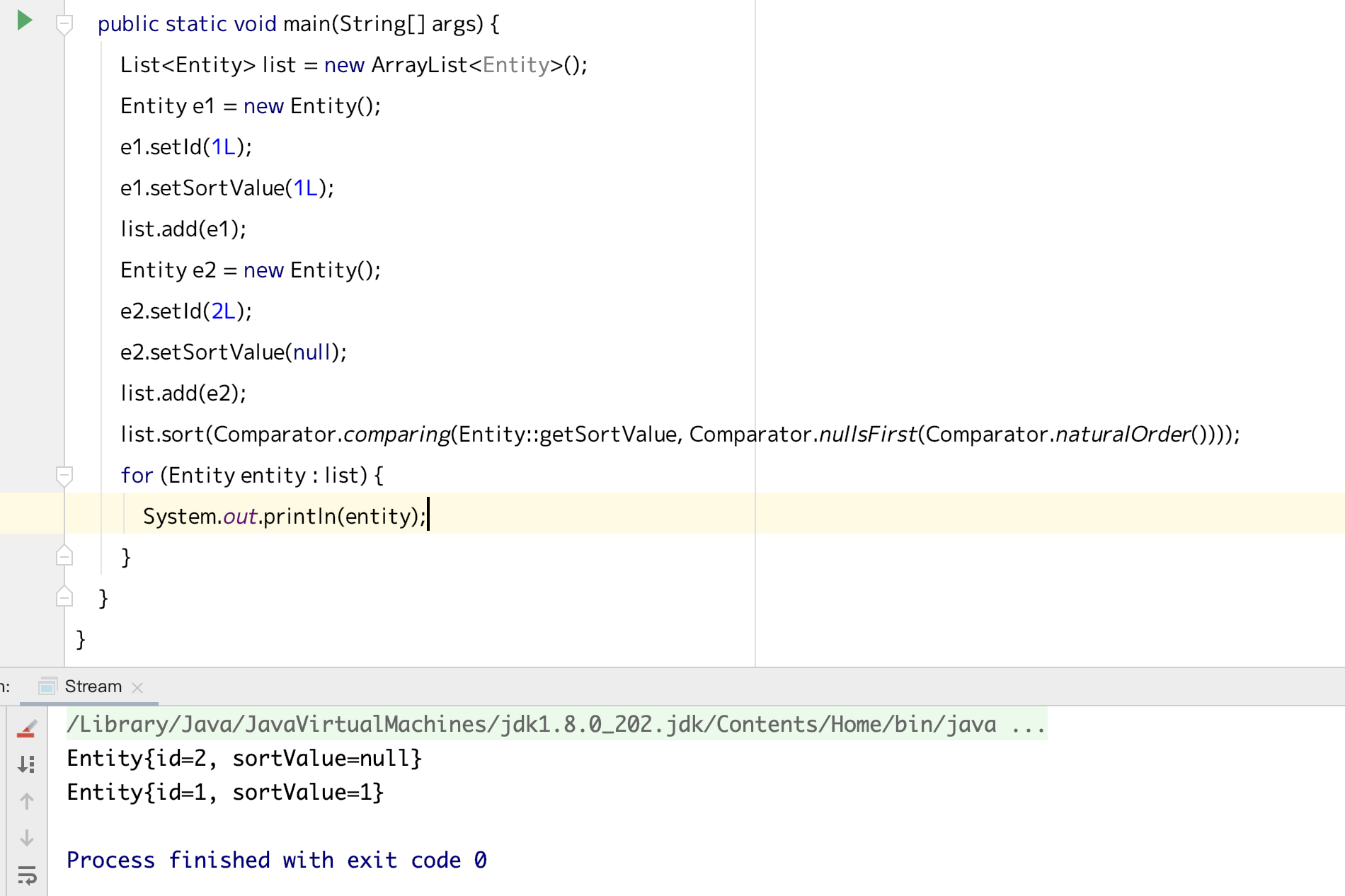
看到这里的e2的排序值是null,在Comparator中如果要正常运行的话,就得判空之类的,这里有两点需要,一个是不想写这个MyComparator,然后也没那么好排除掉list里排序值,那么有什么办法能解决这种问题呢,应该说java的这方面真的是很强大
![]()
看一下nullsFirst的实现
1
2
3
4
5
6
7
8
9
10
11
12
13
14
15
16
17
18
19
20
21
22
| final static class NullComparator<T> implements Comparator<T>, Serializable {
private static final long serialVersionUID = -7569533591570686392L;
private final boolean nullFirst;
private final Comparator<T> real;
@SuppressWarnings("unchecked")
NullComparator(boolean nullFirst, Comparator<? super T> real) {
this.nullFirst = nullFirst;
this.real = (Comparator<T>) real;
}
@Override
public int compare(T a, T b) {
if (a == null) {
return (b == null) ? 0 : (nullFirst ? -1 : 1);
} else if (b == null) {
return nullFirst ? 1: -1;
} else {
return (real == null) ? 0 : real.compare(a, b);
}
}
|
核心代码就是下面这段,其实就是帮我们把前面要做的事情做掉了,是不是挺方便的,小记一下哈