Tomcat 系列篇四-介绍下 Valve 架构
valve 是 Tomcat 架构中比较重要的一个组成部分,
之前说到
connector.getService().getContainer().getPipeline().getFirst().invoke(
                        request, response);
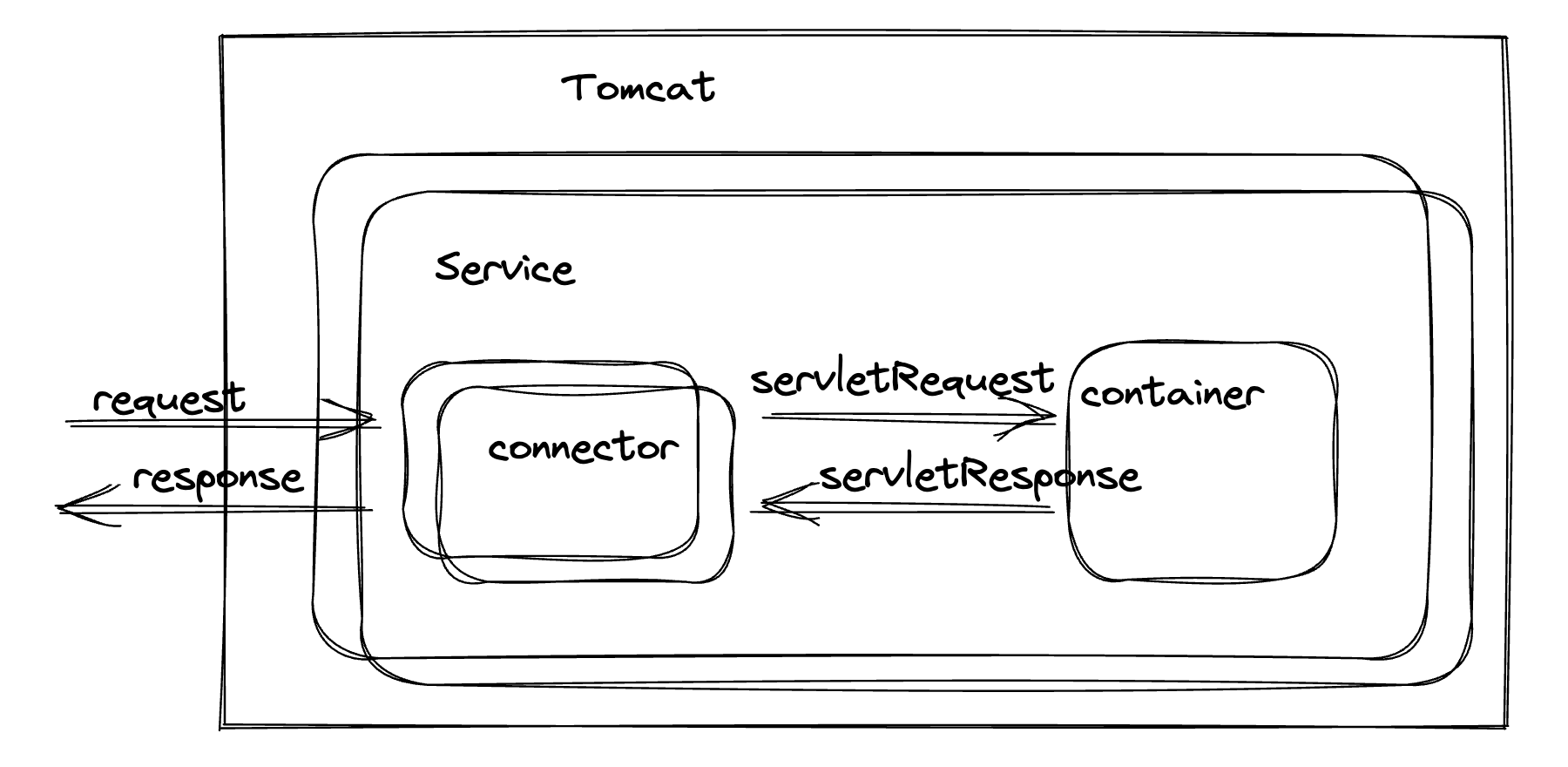
这段代码是通过 CoyoteAdapter 将请求处理往 container 传,这里就有个 pipeline 机制,这个 pipeline 可以看一下接口
public interface Pipeline extends Contained {

    public Valve getBasic();

    public void setBasic(Valve valve);

    public void addValve(Valve valve);

    public Valve[] getValves();

    public void removeValve(Valve valve);

    public Valve getFirst();

    public boolean isAsyncSupported();

    public void findNonAsyncValves(Set<String> result);
}
这里可以往 pipeline 里添加 valve,然后看下 valve 的接口
public interface Valve {

    public Valve getNext();

    public void setNext(Valve valve);

    public void backgroundProcess();

    public void invoke(Request request, Response response)
        throws IOException, ServletException;


    public boolean isAsyncSupported();
}
这里主要看的就是 getNext 跟 setNext,就变成了一个有序的 pipeline,然后就是 invoke 方法,其实 pipeline 是由两部分组成,valve 在其中起到了前后衔接的重要作用,而且可以再 invoke 中进一步串联调用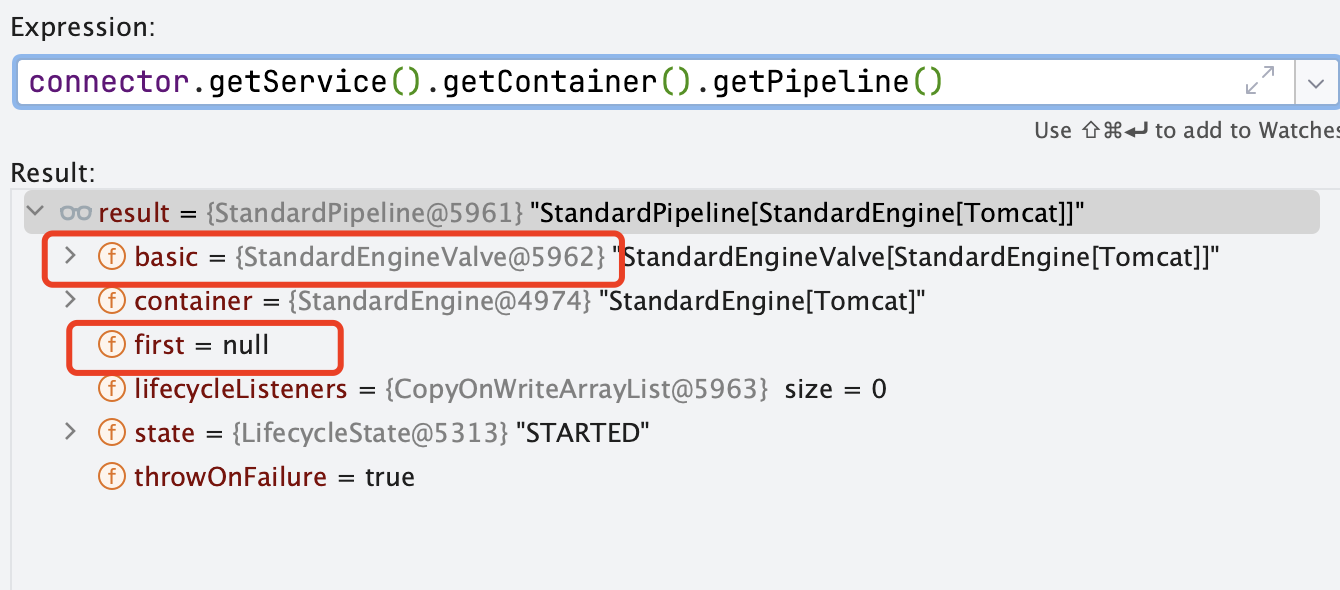
图中我们可以看到,对于 container 这个 pipeline,是没设置 first 的,只有 basic,basic 就是个兜底的 valve,在 StandardPipeline 中的 getFirst 实现
@Override
public Valve getFirst() {
    if (first != null) {
        return first;
    }

    return basic;
}
取不到 first 就降级到 basic,也就是这里的 StandardEngineValve,
它的 invoke 我们来看下
@Override
public final void invoke(Request request, Response response)
    throws IOException, ServletException {

    // Select the Host to be used for this Request
    Host host = request.getHost();
    if (host == null) {
        // HTTP 0.9 or HTTP 1.0 request without a host when no default host
        // is defined.
        // Don't overwrite an existing error
        if (!response.isError()) {
            response.sendError(404);
        }
        return;
    }
    if (request.isAsyncSupported()) {
        request.setAsyncSupported(host.getPipeline().isAsyncSupported());
    }

    // Ask this Host to process this request
    host.getPipeline().getFirst().invoke(request, response);
}
比较简单,就是调用 host 中的 pipeline 里的第一个 valve 来处理
第一个是 org.apache.catalina.valves.ErrorReportValve,
这里处理的其实是先调用了 next
@Override
    public void invoke(Request request, Response response) throws IOException, ServletException {

        // Perform the request
        getNext().invoke(request, response);

        if (response.isCommitted()) {
            if (response.setErrorReported()) {
                // Error wasn't previously reported but we can't write an error
                // page because the response has already been committed.

                // See if IO is allowed
                AtomicBoolean ioAllowed = new AtomicBoolean(true);
                response.getCoyoteResponse().action(ActionCode.IS_IO_ALLOWED, ioAllowed);

                if (ioAllowed.get()) {
                    // I/O is currently still allowed. Flush any data that is
                    // still to be written to the client.
                    try {
                        response.flushBuffer();
                    } catch (Throwable t) {
                        ExceptionUtils.handleThrowable(t);
                    }
                    // Now close immediately to signal to the client that
                    // something went wrong
                    response.getCoyoteResponse().action(ActionCode.CLOSE_NOW,
                            request.getAttribute(RequestDispatcher.ERROR_EXCEPTION));
                }
            }
            return;
        }

        Throwable throwable = (Throwable) request.getAttribute(RequestDispatcher.ERROR_EXCEPTION);

        // If an async request is in progress and is not going to end once this
        // container thread finishes, do not process any error page here.
        if (request.isAsync() && !request.isAsyncCompleting()) {
            return;
        }

        if (throwable != null && !response.isError()) {
            // Make sure that the necessary methods have been called on the
            // response. (It is possible a component may just have set the
            // Throwable. Tomcat won't do that but other components might.)
            // These are safe to call at this point as we know that the response
            // has not been committed.
            response.reset();
            response.sendError(HttpServletResponse.SC_INTERNAL_SERVER_ERROR);
        }

        // One way or another, response.sendError() will have been called before
        // execution reaches this point and suspended the response. Need to
        // reverse that so this valve can write to the response.
        response.setSuspended(false);

        try {
            report(request, response, throwable);
        } catch (Throwable tt) {
            ExceptionUtils.handleThrowable(tt);
        }
    }
虽然是放在 first,实际是先调用 next 的 invoke,也就是 org.apache.catalina.core.StandardHostValve 的invoke 方法
@Override
    public final void invoke(Request request, Response response)
        throws IOException, ServletException {

        // Select the Context to be used for this Request
        Context context = request.getContext();
        if (context == null) {
            // Don't overwrite an existing error
            if (!response.isError()) {
                response.sendError(404);
            }
            return;
        }

        if (request.isAsyncSupported()) {
            request.setAsyncSupported(context.getPipeline().isAsyncSupported());
        }

        boolean asyncAtStart = request.isAsync();

        try {
            context.bind(Globals.IS_SECURITY_ENABLED, MY_CLASSLOADER);

            if (!asyncAtStart && !context.fireRequestInitEvent(request.getRequest())) {
                // Don't fire listeners during async processing (the listener
                // fired for the request that called startAsync()).
                // If a request init listener throws an exception, the request
                // is aborted.
                return;
            }

            // Ask this Context to process this request. Requests that are
            // already in error must have been routed here to check for
            // application defined error pages so DO NOT forward them to the the
            // application for processing.
            try {
                if (!response.isErrorReportRequired()) {
                    // 交给 context 去处理请求了
                    context.getPipeline().getFirst().invoke(request, response);
                }
            } catch (Throwable t) {
                ExceptionUtils.handleThrowable(t);
                container.getLogger().error("Exception Processing " + request.getRequestURI(), t);
                // If a new error occurred while trying to report a previous
                // error allow the original error to be reported.
                if (!response.isErrorReportRequired()) {
                    request.setAttribute(RequestDispatcher.ERROR_EXCEPTION, t);
                    throwable(request, response, t);
                }
            }

            // Now that the request/response pair is back under container
            // control lift the suspension so that the error handling can
            // complete and/or the container can flush any remaining data
            response.setSuspended(false);

            Throwable t = (Throwable) request.getAttribute(RequestDispatcher.ERROR_EXCEPTION);

            // Protect against NPEs if the context was destroyed during a
            // long running request.
            if (!context.getState().isAvailable()) {
                return;
            }

            // Look for (and render if found) an application level error page
            if (response.isErrorReportRequired()) {
                // If an error has occurred that prevents further I/O, don't waste time
                // producing an error report that will never be read
                AtomicBoolean result = new AtomicBoolean(false);
                response.getCoyoteResponse().action(ActionCode.IS_IO_ALLOWED, result);
                if (result.get()) {
                    if (t != null) {
                        throwable(request, response, t);
                    } else {
                        status(request, response);
                    }
                }
            }

            if (!request.isAsync() && !asyncAtStart) {
                context.fireRequestDestroyEvent(request.getRequest());
            }
        } finally {
            // Access a session (if present) to update last accessed time, based
            // on a strict interpretation of the specification
            if (ACCESS_SESSION) {
                request.getSession(false);
            }

            context.unbind(Globals.IS_SECURITY_ENABLED, MY_CLASSLOADER);
        }
    }
这里的往下就是调用 context 的 pipeline 去处理请求了, StandardContext 的 pipeline 里的 first 是
org.apache.catalina.authenticator.NonLoginAuthenticator,处理认证相关的,然后 basic 就是
org.apache.catalina.core.StandardContextValve, 这里的来看下
@Override
    public final void invoke(Request request, Response response)
        throws IOException, ServletException {

        // Disallow any direct access to resources under WEB-INF or META-INF
        MessageBytes requestPathMB = request.getRequestPathMB();
        if ((requestPathMB.startsWithIgnoreCase("/META-INF/", 0))
                || (requestPathMB.equalsIgnoreCase("/META-INF"))
                || (requestPathMB.startsWithIgnoreCase("/WEB-INF/", 0))
                || (requestPathMB.equalsIgnoreCase("/WEB-INF"))) {
            response.sendError(HttpServletResponse.SC_NOT_FOUND);
            return;
        }

        // Select the Wrapper to be used for this Request
        Wrapper wrapper = request.getWrapper();
        if (wrapper == null || wrapper.isUnavailable()) {
            response.sendError(HttpServletResponse.SC_NOT_FOUND);
            return;
        }

        // Acknowledge the request
        try {
            response.sendAcknowledgement(ContinueResponseTiming.IMMEDIATELY);
        } catch (IOException ioe) {
            container.getLogger().error(sm.getString(
                    "standardContextValve.acknowledgeException"), ioe);
            request.setAttribute(RequestDispatcher.ERROR_EXCEPTION, ioe);
            response.sendError(HttpServletResponse.SC_INTERNAL_SERVER_ERROR);
            return;
        }

        if (request.isAsyncSupported()) {
            request.setAsyncSupported(wrapper.getPipeline().isAsyncSupported());
        }
        wrapper.getPipeline().getFirst().invoke(request, response);
    }
会调用 wrapper 的 pipeline 去处理请求,这里也只有一个org.apache.catalina.core.StandardWrapperValve
这部分的逻辑比较长,因为要串联后面的 filter 流程
@Override
    public final void invoke(Request request, Response response)
        throws IOException, ServletException {

        // Initialize local variables we may need
        boolean unavailable = false;
        Throwable throwable = null;
        // This should be a Request attribute...
        long t1=System.currentTimeMillis();
        requestCount.incrementAndGet();
        StandardWrapper wrapper = (StandardWrapper) getContainer();
        Servlet servlet = null;
        Context context = (Context) wrapper.getParent();

        // Check for the application being marked unavailable
        if (!context.getState().isAvailable()) {
            response.sendError(HttpServletResponse.SC_SERVICE_UNAVAILABLE,
                           sm.getString("standardContext.isUnavailable"));
            unavailable = true;
        }

        // Check for the servlet being marked unavailable
        if (!unavailable && wrapper.isUnavailable()) {
            container.getLogger().info(sm.getString("standardWrapper.isUnavailable",
                    wrapper.getName()));
            long available = wrapper.getAvailable();
            if ((available > 0L) && (available < Long.MAX_VALUE)) {
                response.setDateHeader("Retry-After", available);
                response.sendError(HttpServletResponse.SC_SERVICE_UNAVAILABLE,
                        sm.getString("standardWrapper.isUnavailable",
                                wrapper.getName()));
            } else if (available == Long.MAX_VALUE) {
                response.sendError(HttpServletResponse.SC_NOT_FOUND,
                        sm.getString("standardWrapper.notFound",
                                wrapper.getName()));
            }
            unavailable = true;
        }

        // Allocate a servlet instance to process this request
        try {
            if (!unavailable) {
                servlet = wrapper.allocate();
            }
        } catch (UnavailableException e) {
            container.getLogger().error(
                    sm.getString("standardWrapper.allocateException",
                            wrapper.getName()), e);
            long available = wrapper.getAvailable();
            if ((available > 0L) && (available < Long.MAX_VALUE)) {
                response.setDateHeader("Retry-After", available);
                response.sendError(HttpServletResponse.SC_SERVICE_UNAVAILABLE,
                           sm.getString("standardWrapper.isUnavailable",
                                        wrapper.getName()));
            } else if (available == Long.MAX_VALUE) {
                response.sendError(HttpServletResponse.SC_NOT_FOUND,
                           sm.getString("standardWrapper.notFound",
                                        wrapper.getName()));
            }
        } catch (ServletException e) {
            container.getLogger().error(sm.getString("standardWrapper.allocateException",
                             wrapper.getName()), StandardWrapper.getRootCause(e));
            throwable = e;
            exception(request, response, e);
        } catch (Throwable e) {
            ExceptionUtils.handleThrowable(e);
            container.getLogger().error(sm.getString("standardWrapper.allocateException",
                             wrapper.getName()), e);
            throwable = e;
            exception(request, response, e);
            servlet = null;
        }

        MessageBytes requestPathMB = request.getRequestPathMB();
        DispatcherType dispatcherType = DispatcherType.REQUEST;
        if (request.getDispatcherType()==DispatcherType.ASYNC) {
            dispatcherType = DispatcherType.ASYNC;
        }
        request.setAttribute(Globals.DISPATCHER_TYPE_ATTR,dispatcherType);
        request.setAttribute(Globals.DISPATCHER_REQUEST_PATH_ATTR,
                requestPathMB);
        // Create the filter chain for this request
        ApplicationFilterChain filterChain =
                ApplicationFilterFactory.createFilterChain(request, wrapper, servlet);

        // Call the filter chain for this request
        // NOTE: This also calls the servlet's service() method
        Container container = this.container;
        try {
            if ((servlet != null) && (filterChain != null)) {
                // Swallow output if needed
                if (context.getSwallowOutput()) {
                    try {
                        SystemLogHandler.startCapture();
                        if (request.isAsyncDispatching()) {
                            request.getAsyncContextInternal().doInternalDispatch();
                        } else {
                            filterChain.doFilter(request.getRequest(),
                                    response.getResponse());
                        }
                    } finally {
                        String log = SystemLogHandler.stopCapture();
                        if (log != null && log.length() > 0) {
                            context.getLogger().info(log);
                        }
                    }
                } else {
                    if (request.isAsyncDispatching()) {
                        request.getAsyncContextInternal().doInternalDispatch();
                    } else {
                        filterChain.doFilter
                            (request.getRequest(), response.getResponse());
                    }
                }

            }
        } catch (ClientAbortException | CloseNowException e) {
            if (container.getLogger().isDebugEnabled()) {
                container.getLogger().debug(sm.getString(
                        "standardWrapper.serviceException", wrapper.getName(),
                        context.getName()), e);
            }
            throwable = e;
            exception(request, response, e);
        } catch (IOException e) {
            container.getLogger().error(sm.getString(
                    "standardWrapper.serviceException", wrapper.getName(),
                    context.getName()), e);
            throwable = e;
            exception(request, response, e);
        } catch (UnavailableException e) {
            container.getLogger().error(sm.getString(
                    "standardWrapper.serviceException", wrapper.getName(),
                    context.getName()), e);
            //            throwable = e;
            //            exception(request, response, e);
            wrapper.unavailable(e);
            long available = wrapper.getAvailable();
            if ((available > 0L) && (available < Long.MAX_VALUE)) {
                response.setDateHeader("Retry-After", available);
                response.sendError(HttpServletResponse.SC_SERVICE_UNAVAILABLE,
                           sm.getString("standardWrapper.isUnavailable",
                                        wrapper.getName()));
            } else if (available == Long.MAX_VALUE) {
                response.sendError(HttpServletResponse.SC_NOT_FOUND,
                            sm.getString("standardWrapper.notFound",
                                        wrapper.getName()));
            }
            // Do not save exception in 'throwable', because we
            // do not want to do exception(request, response, e) processing
        } catch (ServletException e) {
            Throwable rootCause = StandardWrapper.getRootCause(e);
            if (!(rootCause instanceof ClientAbortException)) {
                container.getLogger().error(sm.getString(
                        "standardWrapper.serviceExceptionRoot",
                        wrapper.getName(), context.getName(), e.getMessage()),
                        rootCause);
            }
            throwable = e;
            exception(request, response, e);
        } catch (Throwable e) {
            ExceptionUtils.handleThrowable(e);
            container.getLogger().error(sm.getString(
                    "standardWrapper.serviceException", wrapper.getName(),
                    context.getName()), e);
            throwable = e;
            exception(request, response, e);
        } finally {
            // Release the filter chain (if any) for this request
            if (filterChain != null) {
                filterChain.release();
            }

            // Deallocate the allocated servlet instance
            try {
                if (servlet != null) {
                    wrapper.deallocate(servlet);
                }
            } catch (Throwable e) {
                ExceptionUtils.handleThrowable(e);
                container.getLogger().error(sm.getString("standardWrapper.deallocateException",
                                 wrapper.getName()), e);
                if (throwable == null) {
                    throwable = e;
                    exception(request, response, e);
                }
            }

            // If this servlet has been marked permanently unavailable,
            // unload it and release this instance
            try {
                if ((servlet != null) &&
                    (wrapper.getAvailable() == Long.MAX_VALUE)) {
                    wrapper.unload();
                }
            } catch (Throwable e) {
                ExceptionUtils.handleThrowable(e);
                container.getLogger().error(sm.getString("standardWrapper.unloadException",
                                 wrapper.getName()), e);
                if (throwable == null) {
                    exception(request, response, e);
                }
            }
            long t2=System.currentTimeMillis();

            long time=t2-t1;
            processingTime += time;
            if( time > maxTime) {
                maxTime=time;
            }
            if( time < minTime) {
                minTime=time;
            }
        }
    }
这里就会创建 ApplicationFilterChain 然后进行filterChain.doFilter(request.getRequest(), response.getResponse());
doFilter 处理